
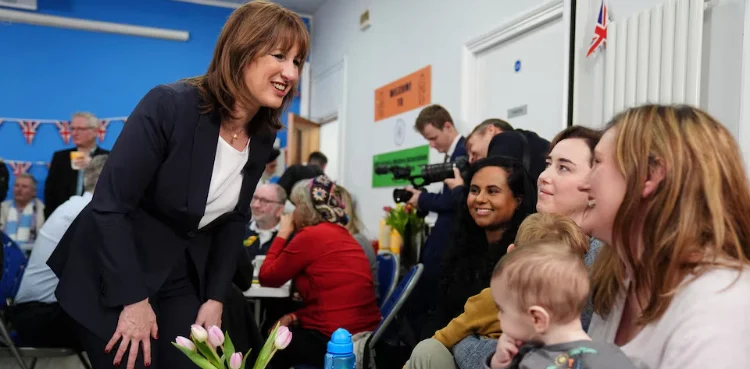
UK Finance Minister Rachel Reeves Defends Historic Tax Hikes Amid Welfare Spending Criticism
UK Finance Minister Rachel Reeves on Thursday defended her decision to raise taxes to post-World War Two highs, countering claims that she is returning the Labour Party to a high-tax, high-spend agenda to fund expanded welfare programs.
Following her announcement of £26 billion ($34 billion) in new tax measures on top of £40 billion introduced in last year’s budget, Reeves faced scrutiny over ending restrictions on child benefits for low-income families with more than two children. While the move enjoys broad support among Labour lawmakers, polls suggest it has more limited backing among voters.
“I don’t think children should be punished by this pernicious policy any longer, and the cost to society of this is huge,” Reeves told LBC Radio.
The Resolution Foundation think tank described the combined 2024-2025 tax increases as the largest consecutive hikes by a newly elected government on record.
Opposition Criticizes Welfare-Funded Tax Increases
The Conservative Party slammed the measures, accusing Reeves of taking money from workers to appease party lawmakers. Reeves, however, emphasized that 60% of families benefiting from the changes include at least one working parent struggling to cover basic needs.
The policy shift also challenges Reform UK, Nigel Farage’s populist party, which has consistently led opinion polls and supported lifting the two-child benefit cap.
Media outlets were critical as well, with Metro, a popular commuter paper, bluntly stating, “You’re Paying!”. Reeves rejected the criticism, citing downgraded productivity forecasts from Britain’s budget watchdog as justification for her tax increases.
“I have to operate within the forecasts that I’m presented with,” she told the BBC. “Of course I could have made different decisions, but I believe those are the right decisions.”
The government projects that scrapping the two-child benefit cap could lift 450,000 children out of poverty, costing £3 billion annually.
Historic Scale of Tax Hikes and Welfare Spending
The Office for Budget Responsibility (OBR) noted that annual welfare spending would rise £16 billion higher by the decade’s end than previously planned. This includes £7 billion from a government U-turn in July, prompted by Labour lawmaker rebellion, which led Prime Minister Keir Starmer to abandon plans limiting benefits for individuals with health conditions.
The OBR also highlighted that downgraded productivity forecasts reduced expected tax revenue by £16 billion, partially offset by a £10 billion increase from faster wage growth and related forecast adjustments. Analysts note that much of the new public spending will be implemented immediately, while the bulk of tax hikes will come in later years, raising questions about Labour’s commitment to the increases ahead of the 2029 election.
Helen Miller, director at the Institute for Fiscal Studies, described the budget as “borrow-to-spend in the short term, and a mix of tax-and-spend and tax-and-bank-it in the medium term.”
The OBR stated that Reeves now has a £22 billion buffer for meeting fiscal targets by decade’s end—more than double her previous forecast.
Responding to slower growth projections, Reeves said she plans to implement additional measures to boost the economy, noting that forecasts do not account for new trade deals or planned infrastructure investments. “There’s plenty more that I’m going to do to grow our economy and make working people better off,” she told Times Radio.
The budget also aimed to reassure bond investors of the government’s ability to meet borrowing targets. While UK long-term borrowing costs briefly rose on Thursday, they only partially reversed the sharp drop seen after the budget announcement. The 30-year gilt yield was up about 2 basis points to 5.23% at 1205 GMT, following a 12 basis point decline the previous day.