The United States has seized an oil tanker that recently departed from Venezuela, according to confirmation from the US Department of Homeland Security (DHS), marking the second such seizure this month.
The latest action follows a statement by US President Donald Trump, who announced earlier this week that he had ordered a “blockade” of sanctioned oil tankers entering and leaving Venezuela as part of efforts to curb what Washington describes as illicit oil trade.
Venezuela strongly condemned the seizure, labeling it “theft and kidnapping”, and accused the US of attempting to steal the country’s natural resources. In an official statement, the Venezuelan government warned that the action would not go unanswered.
“These acts will not go unpunished,” the statement said, adding that Caracas plans to file complaints with the UN Security Council, other multilateral organizations, and governments worldwide.
🚢 Operation Details
The operation was led by the US Coast Guard, mirroring a similar action earlier this month. According to US officials, a specialized tactical team boarded the vessel while it was sailing in international waters.
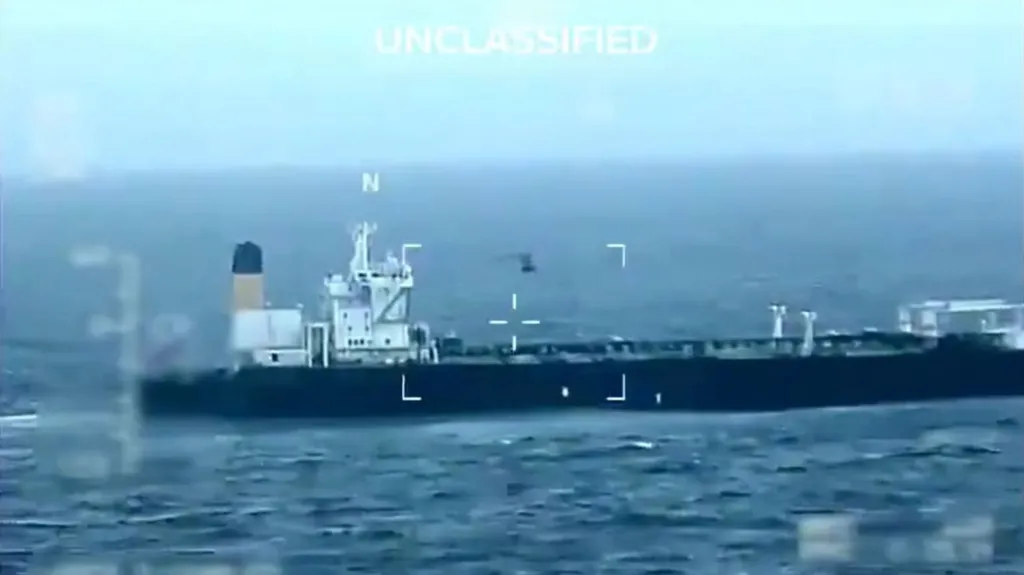
DHS Secretary Kristi Noem, whose department oversees the Coast Guard, shared footage of the operation on social media platform X. In her post, Noem stated that the tanker had been intercepted in a pre-dawn operation on December 20, with support from the US Department of Defense.
The video shows US helicopters landing on the deck of a ship named Centuries. Noem said the United States would continue targeting what it calls the illicit movement of sanctioned oil.
“We will find you, and we will stop you,” she wrote.
⚓ About the Seized Vessel
The Centuries is registered under the Panamanian flag, although maritime records indicate it has also sailed under Greek and Liberian flags in recent years. Despite this, the ship does not appear on the US Treasury’s list of sanctioned vessels, according to publicly available records.
🔥 Growing Military Presence
In recent weeks, the US has increased its military presence in the Caribbean Sea, carrying out multiple operations against vessels allegedly linked to drug trafficking. US forces have reportedly conducted deadly strikes on suspected Venezuelan drug-smuggling boats, killing around 100 people.
However, the US has not publicly presented evidence proving the vessels were transporting narcotics, and the operations have faced growing scrutiny from members of Congress.
Washington has accused Venezuelan President Nicolás Maduro of leading the Cartel de los Soles, a group designated by the US as a terrorist organization. Maduro has rejected the accusations, calling them politically motivated.
The Trump administration claims the group uses “stolen oil” to finance criminal activities including drug trafficking, human trafficking, and violence.
Following the seizure, US Defense Secretary Pete Hegseth stated that the US would continue maritime interdiction operations to dismantle criminal networks, insisting that “violence, drugs, and chaos will not control the Western Hemisphere.”
🛢️ Economic Impact
Venezuela holds the world’s largest proven oil reserves and relies heavily on oil exports to fund government operations. Analysts warn that continued seizures and restrictions could further strain the country’s already fragile economy.
Trump’s blockade announcement came just days after the US seized another tanker, the Skipper, which Washington described as part of a “ghost fleet” used to conceal illicit oil shipments. Venezuela’s government also condemned that action, accusing the US of kidnapping the crew and stealing the vessel.