The Enduring Legacy of Ajrak: How Sindh’s Iconic Fabric Weaves Stories of Heritage and Sustainability
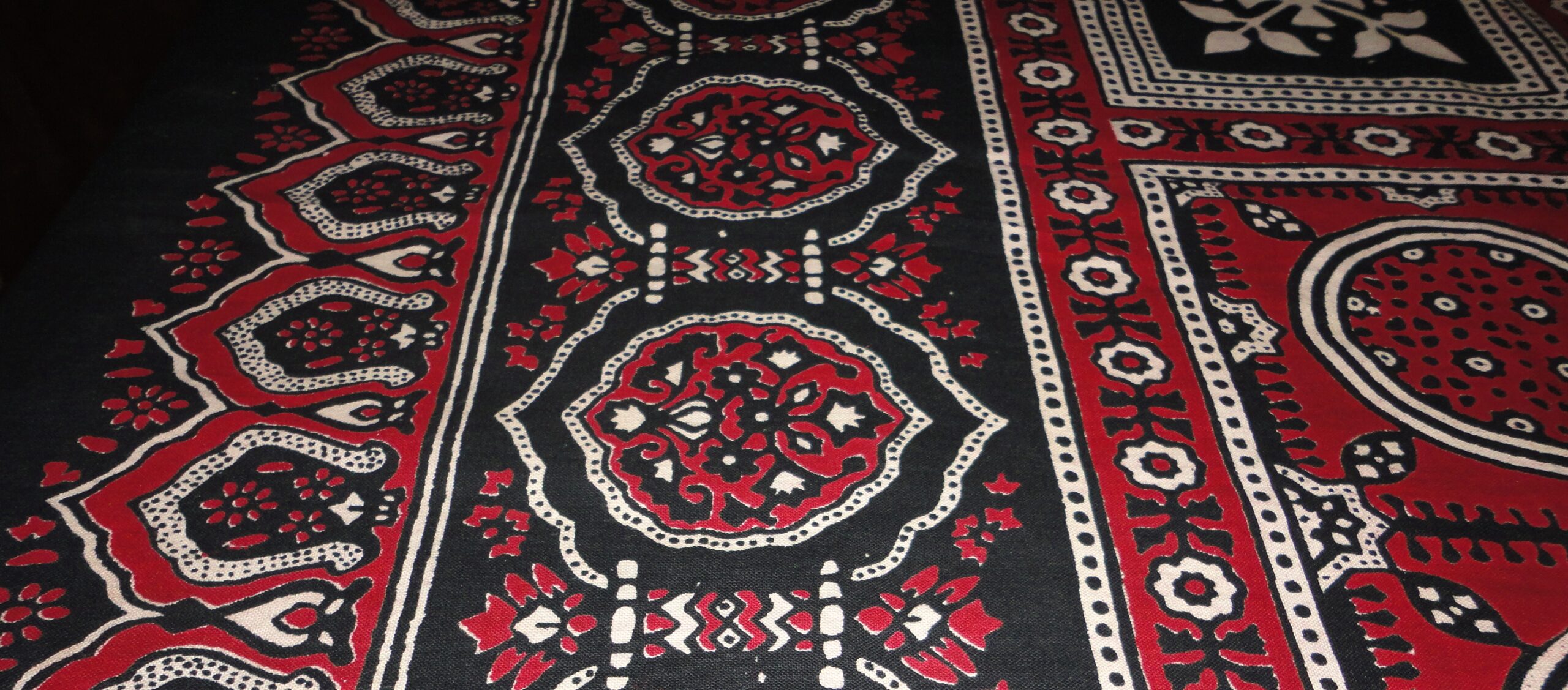
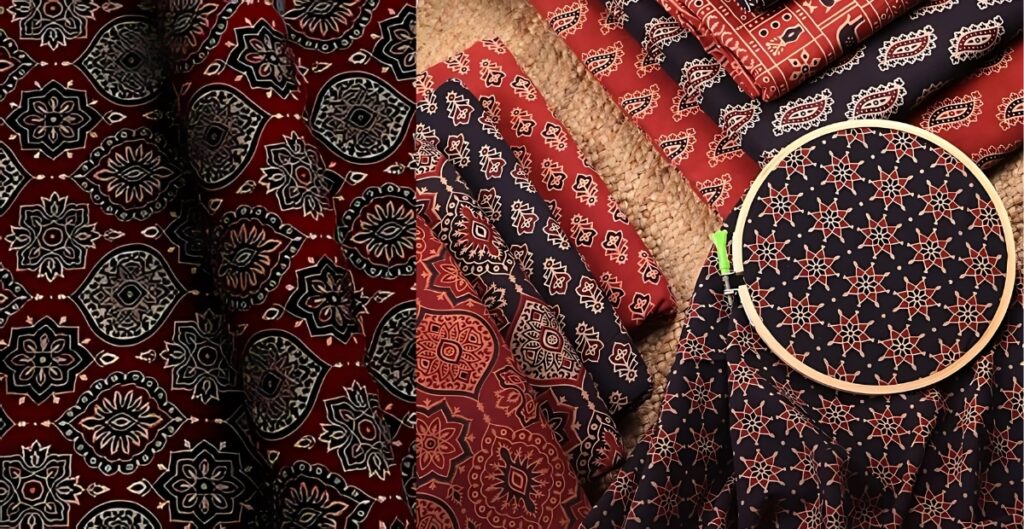
In the sun-baked landscapes of Sindh, where the Indus River has cradled civilizations for millennia, one symbol stands as a timeless emblem of identity: Ajrak. This intricate block-printed fabric, with its geometric patterns in deep indigos, fiery reds, and earthy browns, is more than mere cloth—it’s a narrative etched in every fold. As globalization accelerates and fast fashion dominates wardrobes worldwide, the revival of Ajrak in contemporary Sindh offers a beacon of cultural preservation and sustainable innovation. In this article, we explore the rich history of Ajrak, its artisanal roots, and its evolving role in empowering local communities while challenging modern environmental woes.
Origins Rooted in Ancient Traditions
Ajrak’s story begins long before the looms of today, tracing back over 4,000 years to the Indus Valley Civilization. Archaeological digs at Mohenjo-Daro, a UNESCO World Heritage site in Sindh, have unearthed terracotta seals adorned with motifs eerily similar to Ajrak’s signature designs—swastikas, peacocks, and interlocking stars symbolizing fertility, protection, and cosmic harmony. These patterns weren’t random; they were imbued with spiritual significance, often worn during rituals or as talismans against evil.
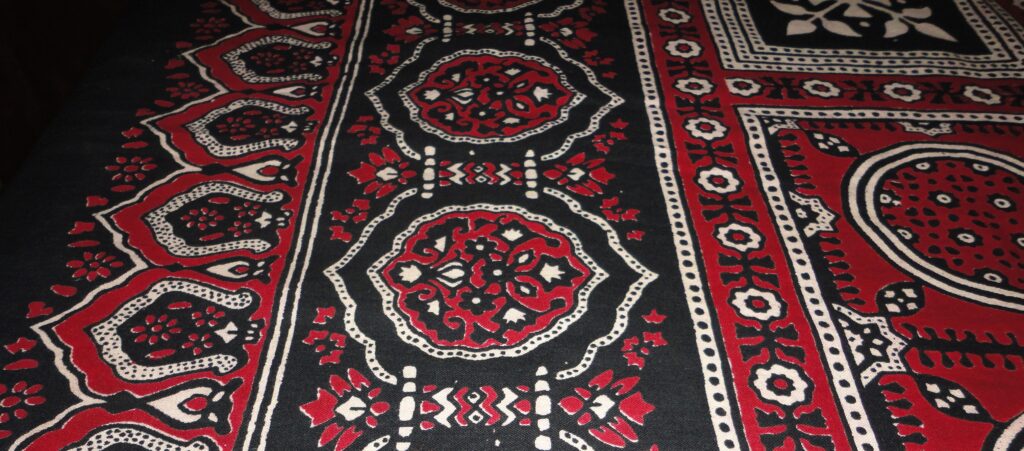
Fast-forward to the 16th century, when Ajrak truly flourished under the patronage of Sindh’s Kalhora and Talpur dynasties. Artisans in villages like Hala and Bhit Shah refined the technique: wooden blocks carved from apple wood are dipped in natural dyes derived from madder roots, iron filings, and the resilient Indigofera tinctoria plant. The process is labor-intensive—up to 20 stages of resist-dyeing, washing in the Indus, and sun-drying—yielding a fabric that doesn’t fade with time but deepens in hue.
What sets Ajrak apart from other block prints, like India’s Bagru or Sanganeri, is its eco-conscious ethos. No synthetic chemicals here; the dyes are fermented in vast clay pots, harnessing the river’s mineral-rich waters for fixation. This harmony with nature isn’t accidental—it’s a philosophy passed down through generations of Khatri artisans, the traditional printers who view their craft as a sacred duty.
Ajrak in Everyday Sindhi Life: From Shawls to Symbols of Resistance
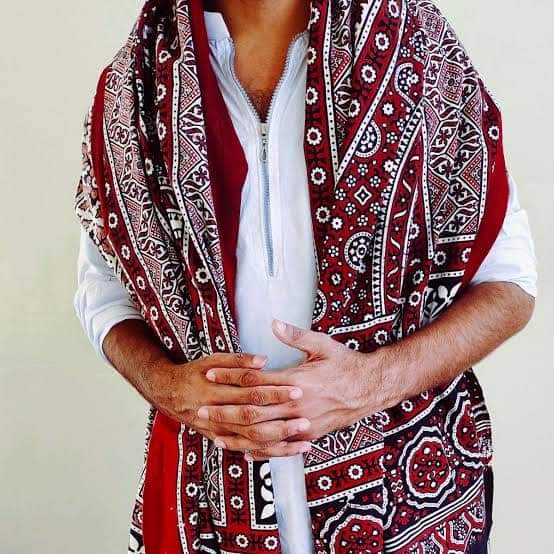
For the people of Sindh, Ajrak transcends aesthetics; it’s woven into the fabric of daily existence. Men drape it as Ajrak topi (turbans) during weddings and festivals like the annual Urs at Shah Abdul Latif Bhitai’s shrine in Bhit Shah, where thousands gather in a sea of indigo. Women fashion it into Ajrak cholis or scarves, blending tradition with practicality in the province’s arid climate.
Politically, Ajrak has been a banner of resilience. During the 1947 partition, it fluttered as a flag of Sindhi pride amid communal strife. In the 1980s, under General Zia-ul-Haq’s regime, Ajrak-clad protesters in Hyderabad symbolized the Sindhi nationalist movement, demanding provincial autonomy. Today, as climate change ravages the Indus basin—causing floods that displaced over 2 million in 2022—Ajrak artisans are repurposing the craft for advocacy. Organizations like the Sindh Ajrak Association are printing patterns with QR codes linking to flood-relief campaigns, turning fabric into a tool for social change.
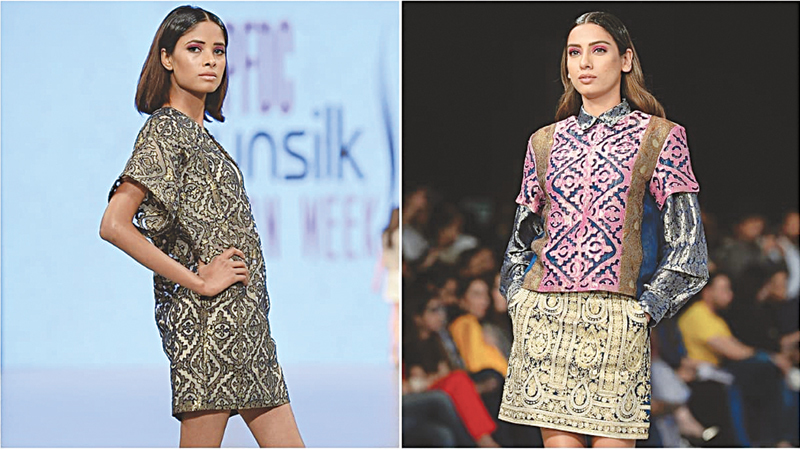
In urban centers like Karachi, a city where 70% of Sindh’s 50 million residents live, Ajrak is shedding its rural image. Fashion designers such as Sania Maskatiya and Maria B have launched Ajrak-inspired collections, featuring fusion pieces like Ajrak denim jackets or evening gowns with metallic overlays. These innovations have boosted exports; according to Pakistan’s Federal Board of Revenue, Ajrak-related handicrafts contributed $15 million to the economy in 2024, a 25% rise from the previous year.
Sustainability Challenges and the Path Forward
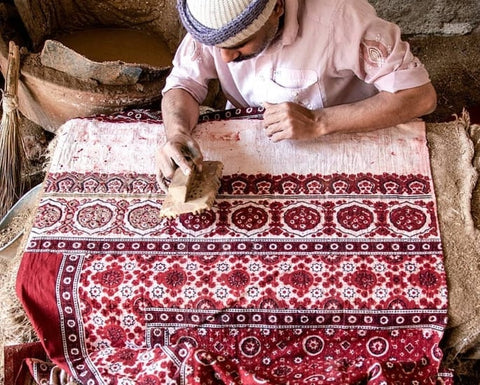
Yet, for all its allure, Ajrak faces existential threats. The decline of the Indus River due to upstream damming in India and over-extraction for agriculture has contaminated dyeing waters with heavy metals. Artisanal families, numbering around 5,000 in core clusters like Tando Yousuf, report a 40% drop in skilled youth entering the trade, lured by factory jobs in China-Pakistan Economic Corridor (CPEC) zones.
Enter innovation: Solar-powered dyeing units in Matiari district, funded by the Aga Khan Foundation, reduce water usage by 60% while preserving color vibrancy. Organic certification initiatives, partnering with global brands like Patagonia, ensure fair-trade premiums reach weavers directly—women, who comprise 80% of the workforce, earning up to PKR 25,000 monthly instead of the poverty-line PKR 8,000.
Moreover, digital marketplaces are democratizing access. Platforms like Daraz.pk and Etsy host “Ajrak Virtual Bazaars,” where buyers worldwide can customize blocks via AI design tools. A 2025 pilot in Sukkur used blockchain to trace each Ajrak piece from cotton farm to final stitch, appealing to eco-conscious millennials who prioritize transparency.
Why Ajrak Matters in a Fast-Fashion World
In an era where Shein and Zara churn out disposable trends, Ajrak reminds us of slow, intentional making. Its patterns, resistant to bleach and time, mirror Sindh’s unyielding spirit—a province that has withstood invasions from Alexander the Great to colonial Brits. By supporting Ajrak, consumers aren’t just buying fabric; they’re investing in biodiversity (natural dyes support wild indigo cultivation), gender equity (empowering rural women), and cultural sovereignty.
As we approach Sindh Cultural Day on December 7, 2025, let’s celebrate Ajrak not as relic, but as revolution. Visit local ateliers in Larkana or shop online from verified cooperatives. In every indigo swirl, there’s a story of survival—yours to wear, share, and sustain.